Mashing converts the starches in malted grain into fermentable sugars. This conversion is done entirely by enzymes, proteins produced by the grain during malting. The critical detail is that these enzymes are temperature-sensitive. Too cold and they work too slowly; too hot and they are denatured and stop working entirely. Hitting and maintaining the right mash temperature is the most important variable in grain mash preparation.
The Two Key Enzymes: Alpha and Beta Amylase
Starch conversion in a mash is carried out primarily by two amylase enzymes, both present in malted grain. They have different temperature optima and produce different results, understanding the difference gives you direct control over the fermentability of your wort.
Beta Amylase, Fermentability enzyme
Beta amylase works at 55–65°C, with optimal activity around 60–65°C. It breaks starch chains into maltose, a simple, highly fermentable sugar that yeast convert efficiently to ethanol. A mash temperature in the lower range favours beta amylase and produces a highly fermentable wort: lower final gravity, higher ABV, and thinner body.
Alpha Amylase, Dextrins enzyme
Alpha amylase works at 65–72°C, with a peak around 68–70°C. It breaks starch chains into longer, more complex sugars called dextrins. These are less fermentable, yeast cannot fully break them down. A mash temperature in the higher range favours alpha amylase and produces a fuller-bodied, less fermentable wort: higher final gravity, lower ABV, more body and mouthfeel.
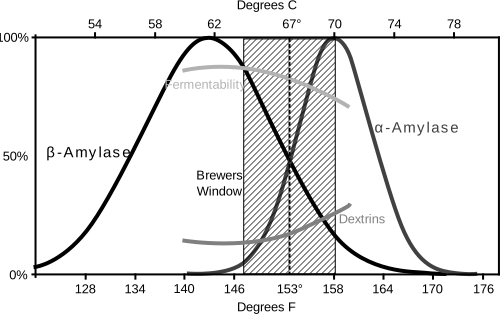
Mash Temperature Chart by Style
The tables below give target mash temperature ranges for common spirit and beer styles. The practical mash temperature for most spirit and beer production sits in the 63–68°C range, the zone where both enzymes are active. Where within that range you target depends on the style you're making and what character you want in the finished product.
By Spirit Type
| Spirit Type | Target Range | Reason | Expected FG |
|---|---|---|---|
| Bourbon / Whiskey | 65–67°C | Balance of fermentability and body, some dextrins contribute mouthfeel to the finished spirit | 1.010–1.018 |
| Single Malt Whisky | 63–66°C | Slightly lower temp for higher fermentability: Scotch distilleries target very dry fermentation | 1.005–1.012 |
| Rye Whiskey | 65–68°C | Higher end to manage rye's high beta-glucan content and improve lautering | 1.012–1.020 |
| Neutral / Vodka base | 63–65°C | Maximum fermentability, lowest possible residual sugar for cleanest wash | 1.000–1.008 |
| Brandy / Fruit wash | No grain mash | Fruit wash, no starch conversion needed | - |
By Beer Style
| Beer Style | Target Range | Reason | Expected FG |
|---|---|---|---|
| Lager / Pilsner | 64–66°C | Lower end for a crisp, dry, highly attenuated finish typical of the style | 1.008–1.012 |
| Pale Ale / IPA | 65–67°C | Favours fermentability for a drier finish that lets hop character stand out | 1.010–1.014 |
| British Bitter / Amber Ale | 66–68°C | Middle ground for balanced body and malt character | 1.012–1.016 |
| Stout / Porter | 68–70°C | Higher end favours alpha amylase for the fuller body and residual sweetness the style calls for | 1.014–1.020 |
Strike Water Temperature
Strike water is the hot water added to the grain to begin the mash. Because grain absorbs heat when you mix it with water, the strike water must always be hotter than your target mash temperature to compensate for the heat absorbed by the grain mass.
The standard formula for calculating strike water temperature is the Palmer formula:
Example: target mash temp 66°C, W:G ratio 3.5 L/kg, grain at 20°C
Tstrike = (0.41 ÷ 3.5) × (66 − 20) + 66 = 0.117 × 46 + 66 = 5.4 + 66 = 71.4°C
The thinner your mash (higher water-to-grain ratio), the smaller the temperature drop when you add grain, so less hot water is needed. A thick mash (2.5–3 L/kg) drops temperature more sharply and needs hotter strike water. A thin mash (4.5–5 L/kg) drops temperature less and needs strike water closer to the target.
Enter your grain bill, water volume, and target mash temperature, the Grain Bill Calculator computes strike water temperature, W:G ratio, and expected OG.
Maintaining Mash Temperature
Getting to the right temperature is only half the task, you need to hold it for the full conversion rest (typically 60–75 minutes). Heat loss during the mash reduces enzyme efficiency and can leave unconverted starch in the wort.
- Preheat your mash tun. Fill the vessel with hot water for 5–10 minutes before doughing in. A cold mash tun absorbs significant heat from your strike water and can drop the mash temperature by 3–5°C before you've added any grain.
- Insulate the mash vessel. Wrap it in towels, blankets, or a commercial mash tun cooler. A well-insulated vessel holds temperature within 1–2°C over a 60-minute rest with no external heat.
- Use a BIAB setup with maintained heat. Brew-in-a-bag on a heat source allows you to monitor and gently correct temperature throughout the mash. Stir regularly to prevent hot spots.
- Check temperature at the start, middle, and end of the rest. Use a calibrated thermometer inserted into the grain bed, not floating on the surface.
Testing for Complete Conversion
The iodine test confirms whether starch conversion is complete before you lauter and proceed. It is simple, cheap, and gives immediate results.
Place a few drops of wort on a white ceramic plate. Add a small drop of iodine solution (potassium iodide, available from homebrew shops). The colour change indicates:
- Amber / brown / no change, conversion is complete. No residual starch present.
- Dark purple / black, starch is still present. Extend the mash by 15–20 minutes and retest.
If the test shows incomplete conversion after 90 minutes, check that your mash temperature was in the correct range, most extended conversion problems are caused by temperatures that were too low or too high to maintain effective enzyme activity.
A digital probe thermometer with 0.1°C resolution. Monitoring mash temperature accurately is not possible with a standard kitchen thermometer. A fast-reading digital probe lets you check multiple points in the grain bed and catch any temperature drop early.
Common Mistakes to Avoid
- Not preheating the mash tun. A cold vessel absorbs 3–5°C from your strike water before you add any grain. Always preheat.
- Measuring temperature at the surface only. The top of the mash is always hotter than the grain bed. Insert your thermometer into the middle of the grain bed for an accurate reading.
- Overshooting temperature and trying to cool quickly. Rapid cooling can shock the grain bed and introduce cold spots. If you overshoot, remove from heat, add a small amount of cold water, stir thoroughly, and recheck.
- Using the same mash temperature for every spirit style. A bourbon mash at 67°C gives great results; the same temperature for a single malt destined for very dry fermentation leaves more unfermentable dextrins than needed. Match the temperature to the spirit style.
- Not checking conversion with an iodine test. A mash that looks right may still have unconverted starch. The iodine test takes 30 seconds and eliminates guesswork.
Iodine test solution for conversion testing. A small bottle of potassium iodide solution confirms whether your mash has fully converted before you lauter. Inexpensive, lasts for many batches, and takes 30 seconds to use.
Frequently Asked Questions
Beer Tasting Journal: Pair your mash process with a complete tasting record. 100 structured entries, score /100, buy-again rating. 6 x 9 in, 116 pages, cream paper.
Go deeper on grain. The Brewer and Distiller's Handbook covers mash chemistry, enzyme science, and the full brewing and distilling process from grain to glass — a thorough companion to this guide.
References
Primary and peer-reviewed sources for the technical claims on this page.
- Beverages (MDPI), peer-reviewed. Optimization of Beer Brewing by Monitoring α-Amylase and β-Amylase Activities during Mashing. Cited for: Beta-amylase activity optimum is around 63–65°C and the enzyme is not thermally stable above that range, while alpha-amylase remains active at higher mash temperatures.
- MacGregor, Bazin, Macri & Babb, Journal of Cereal Science 29(2):161–169 (1999). Modelling the contribution of α-amylase, β-amylase and limit dextrinase to starch degradation during mashing. Cited for: An independent model of how alpha-amylase, beta-amylase and limit dextrinase each contribute to starch conversion during the mash, and how their differing thermostability shapes fermentability.